Track spotlights for accent lighting
Sampo track spotlights serve enquiries for directional light in retail, hospitality, galleries and other interiors. Begin with the accent task, then compare the holder family, head form and exact rail match.
Discuss a spotlight purchase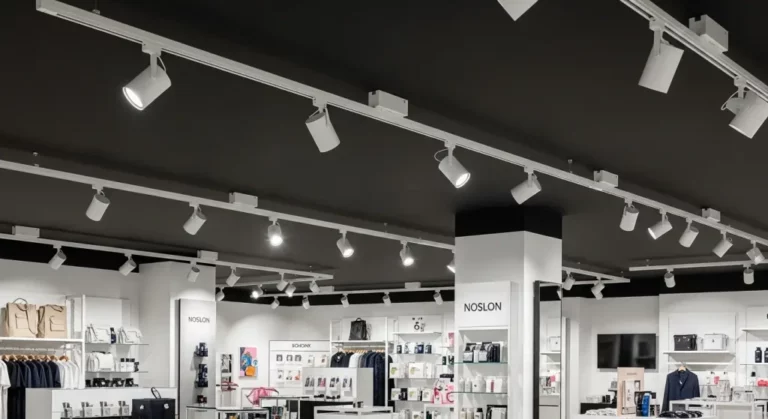
Spotlights bring attention to a target
A directional accent can distinguish merchandise or an object from its surroundings. Describe the object and the viewing route when asking about a spotlight head. Attention depends on the relationship between the lit object and its surroundings. Adding more directed light may be less useful than changing where it lands or reducing distracting spill. Identify the object that should stand out and describe what sits beside it, giving the spotlight brief a visual purpose that can guide decisions about direction, distribution and the position of the head.
Accent versus a broader wash
A focused highlight and a wider illuminated surface ask different things of the selected head and optic. Explain whether the priority is a distinct accent or a more continuous wall treatment.
A broad wash can connect neighbouring surfaces, while a concentrated accent can separate an object from its background. Neither effect should be chosen only because a demonstration looks dramatic. Think about whether the display is meant to read as a group or as distinct items, and use that decision to explain the desired coverage before comparing the proposed spotlight arrangements available.
Holder families in the spotlight range
GU10, MR16, COB and E27 PAR20/PAR30 offer different starting points for spotlight enquiries. Identify the desired light-source arrangement and whether a complete light or housing is needed. The holder family and the lighting effect answer different parts of the buying brief. A maintenance preference may favour a replaceable lamp arrangement, while the display still needs a particular visual treatment. Keep those intentions side by side so a familiar holder choice is not mistaken for a complete optical decision when discussing the head and lamp combination for the project.
Aiming and position work together
A head's adjustment matters alongside the rail location and the distance to the object. Include a marked layout and request the adjustment details of the proposed model.
The same target can be reached from different ceiling positions, with different consequences for shadows and glare. Look at where people stand and which side of the object should receive attention before settling on the track location. That relationship gives aiming adjustments a clear purpose and avoids asking a joint to compensate for an unsuitable position in the overall room layout.
Keep brightness requests model-specific
Power, colour temperature, rendering and beam angle vary by model and need confirmation with the enquiry. State the desired visual result and ask for the corresponding head data. Brightness language becomes clearer when it explains a comparison in the room. A product may need to stand out from a shelf, or an artwork may need a restrained relationship with nearby surfaces. Describe that intention and the existing lighting context, leaving model-specific light characteristics to the technical discussion rather than assigning an assumed performance level to the whole spotlight family.
Confirm the actual track connection
The spotlight appearance does not establish a rail wire-system or voltage match. Send the rail identification and ask about the adapter for the exact proposed head.
A replacement spotlight should remain linked to the exact rail it will use throughout the purchasing process. A similar body shape or familiar holder does not resolve the upper connection. Keep installation photographs labelled by room or project area so a proposed head can be discussed against the correct retained equipment when several apparently similar track runs exist in the same building.
Finish can support the interior
For the head appearance, discuss black, white, grey and project colours alongside the required surface finish. Provide the desired colour reference and request the chosen model's material and finish details. Finish can make the equipment recede or become part of the ceiling composition, but the decision should include every visible component. An adapter or joint that differs from the body can draw attention even when the chosen colour suits the interior. Review the assembled appearance beside the intended ceiling finish rather than evaluating the main body as an isolated decorative object alone.
Turn the accent brief into an enquiry
A clear request combines holder, offer form, target, rail details, quantity and destination market. Ask for the applicable model files and confirm the selected head before finalising the purchase.
An accent brief becomes actionable when the target, viewing position and retained installation are described together. Include what should remain quiet as well as what should attract attention. This helps a quotation discussion stay connected to the intended visual result while the head arrangement, connection and requested characteristics are considered as separate parts of the same purchasing decision for the project.