Single track lights and short bars
A single head or a short bar can serve a compact area without a long ceiling run. Small arrangements still need a complete system schedule and a clear distinction between the head, rail and electrical feed.
Review single heads and bars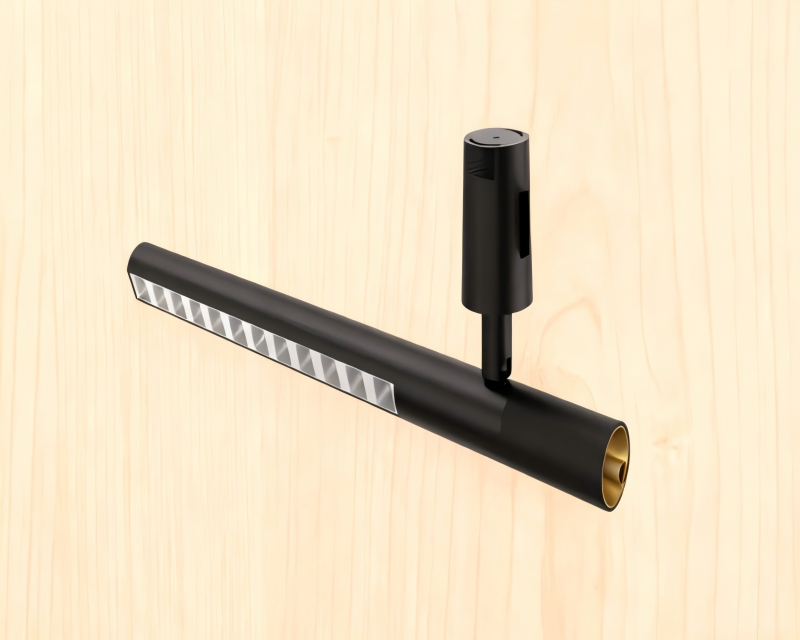
One head needs a defined target
A single spotlight is most useful when its task is specific rather than expected to light every part of a room. Identify the object or working surface it should serve. A compact installation benefits from a clear boundary around its job. Mark the object or surface that needs attention and indicate which existing lighting will continue serving the surrounding area. This prevents the proposed head from being judged against an undefined expectation to illuminate everything nearby and makes it easier to discuss its beam and aiming requirements in useful terms.
Short bars change the visible form
A linear bar and a single directional head distribute attention differently. Compare the lighting role before deciding which compact format looks better.
A short bar introduces a different visual emphasis from a concentrated spotlight, even when both occupy a small ceiling area. Consider whether the objective is to draw attention to an object or support activity across a broader surface. Compare the complete visible assembly in that setting rather than treating compact formats as interchangeable alternatives chosen only by their overall outline.
Small does not mean complete
A short run can still require feeds, connectors, mounting parts and a compatible head. Ask what is included in any proposed kit or assembly. Use a component list even when the installation looks simple. The rail, feed and mounting arrangement still need to form an appropriate system with the chosen head or bar. Separating those items makes the quotation easier to understand and avoids an order in which the most visible product is present but the parts needed for the intended arrangement remain undefined.
Supply position constrains the layout
The available outlet or ceiling feed can influence the practical route even for a compact arrangement. Mark the electrical entry alongside the desired lighting position.
Locate the available supply on the room drawing before choosing the final position of the compact system. Its relationship to the target can limit where a short rail makes practical sense. Reviewing the entry point early also helps preserve a neat appearance, particularly when the project retains the finished ceiling and has little scope to conceal a revised electrical route later.
Give the head room to aim
A single head near a wall or beam can lose useful adjustment because of the surrounding construction. Check the final aiming direction and body clearance. The adjustment path matters even beside a small rail. Show nearby walls, shelving and ceiling features that could restrict the body as it turns toward its target. Evaluating the final angle can reveal whether the proposed head has room to do its job, which is more useful than judging flexibility from a catalogue photograph of the joint in isolation alone.
Leave room for future changes
A compact layout may need a different object or furniture position later. Consider whether the arrangement can be repositioned within the intended system.
Think about the likely next arrangement of the room rather than only the display currently in place. A shelf might move or a working surface might gain another purpose. Describing those foreseeable changes helps establish which flexibility is valuable, while keeping the initial purchase proportionate to the present task instead of adding equipment without a clear use for its adjustment.
Compare kits by actual contents
The phrase single-light kit can hide differences in lamp inclusion, adapter, rail and mounting accessories. Request an itemised description and the exact compatibility details. Compare the supplied contents line by line rather than assuming that the word kit has a consistent meaning. Identify whether the proposed set includes the intended head, suitable feed and mounting parts, and separate any additional accessories. A compact package can otherwise look directly comparable to another offer while describing a different scope of the installation being planned by the buyer.
Write a compact system request
A useful enquiry gives the target, available space, supply position, rail details and preferred head form. Ask about the appropriate available assembly and its included parts.
A short request can still be precise when it includes a marked target photograph, supply position and identified system details. Explain whether the desired form is a directional head or a linear element and describe what is already lighting the room. These attachments help Sampo discuss the appropriate assembly without turning a modest purchase into a vague general room-lighting enquiry.
Discuss single track lights and short bars with Sampo
Separate the single-head and bar requests in your message to Sampo and mark which target each proposed unit serves.
Ask Sampo about fit