Track heads for retail and hospitality
Sampo supplies track-light families for shops, restaurants and hotels. A useful head enquiry distinguishes the merchandise or feature being lit from the wider room lighting and includes the specific rail details.
Request a track light quotation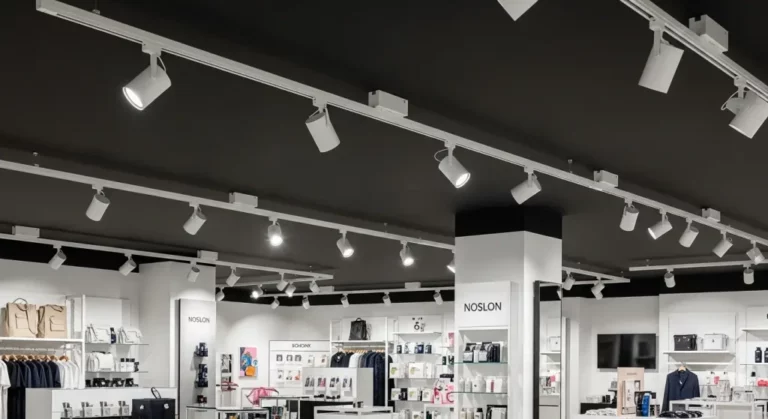
Feature merchandise as a head-selection task
A shop may need a focused product accent or a broader shelf treatment. Identify which merchandise receives the light and whether its position will change. Changing merchandise can require a new emphasis without changing the whole room arrangement. Tell Sampo whether the feature becomes taller, broader or moves to another position, then identify the parts of the display that should remain visually quiet. This describes the actual flexibility being sought and helps avoid selecting a head merely because it looks similar to equipment seen in a different shop with different products and viewing conditions.
Store shelves and viewing directions
The depth of a shelf and the customer's route affect the useful aiming direction. Send a marked display photograph with the desired areas of attention.
Shelf depth introduces obstructions that a straight photograph can hide. Add a side view or mark projecting shelves so the beam path can be considered alongside labels, packaging and the customer's eye line. The useful result is light where browsing takes place, with reflections and shadows assessed in relation to the products being displayed rather than the appearance of an empty shelving unit under an isolated demonstration head.
Restaurant display accents
Restaurants can enquire about heads for a feature wall, display or other interior accent. Separate the accent task from the lighting used for circulation and table activity. An evening accent should be reviewed after the surrounding room reaches its intended service setting. A feature that looks restrained during daytime can become dominant as nearby lighting changes. Describe that relationship in the enquiry, including the nearest seats and approach routes, so a head selected for a restaurant display is evaluated as part of the dining experience rather than as a bright object presented without its ordinary interior context.
Hotel enquiries by area
Reception displays and other hotel interior accents can require different head characteristics. Create a separate request line for each role and intended rail system.
Area labels become more useful when they name the task within them. Specify whether a reception head highlights an object, illuminates a display or contributes to another defined visual role. Keeping this distinction in the quotation schedule helps purchasing compare like requirements across hotel areas and preserves the reason for any different model choices, even where the design team wants the visible bodies to share a coordinated appearance.
Choose the source family carefully
Complete-head enquiries can follow GU10, MR16, COB and E27 PAR20/PAR30 routes for a complete-head enquiry. State the preferred source arrangement and request the relevant model data. Source selection should account for how the buyer plans to maintain the installation. Describe any existing lamp purchasing routine or preference for an integrated arrangement, then request the proposed model information alongside that requirement. This makes the family comparison a practical purchasing discussion and prevents the familiar appearance of a lamp or head from becoming the sole reason for choosing it across applications that may have different priorities.
Dimming and focus as specific requirements
The COB range includes dimmable and adjustable-focus variants rather than a single family-wide control arrangement. Raise the required feature and ask for the appropriate model information.
Explain the change the feature is meant to accommodate. Focus adjustment relates to the illuminated area, while dimming relates to the desired operating level and its control arrangement. Keeping those objectives distinct helps Sampo discuss the appropriate variant and avoids an enquiry where a broad request for flexibility leaves the buyer and technical team with different assumptions about what the proposed head is expected to do during use.
Match the existing rail
Rail wire system and voltage need confirmation for the exact rail and proposed head. Attach rail identification before comparing replacement heads. Retained rails should be identified before the visual shortlist becomes a purchasing commitment. Gather available markings and appropriate photographs of the existing equipment, then keep them attached to the replacement request. This makes compatibility a visible part of the selection rather than an assumption carried forward from an attractive head image, particularly when a renovation changes the interior appearance but leaves the underlying track system in place for continued use.
Prepare a commercial and technical request
A complete request identifies the head role, holder, offer form, quantity, market and any customisation. Ask for the relevant model details and applicable certificate files.
Give each proposed head an enquiry line that connects its location, lighting role and system information. Put appearance requests and required files beside that same description so replies remain associated with the intended item. A structured request is especially useful when a project contains changing merchandise displays and quieter hospitality accents, since a shared aesthetic does not mean that every head serves the same task or needs similar controls.