GU10 track lights and housings
Sampo offers GU10 complete track lights and GU10 housings. Choose the complete-light route for a finished head enquiry or the housing route when an assembler or lighting brand needs the body as a separate purchase.
Request a track light quotation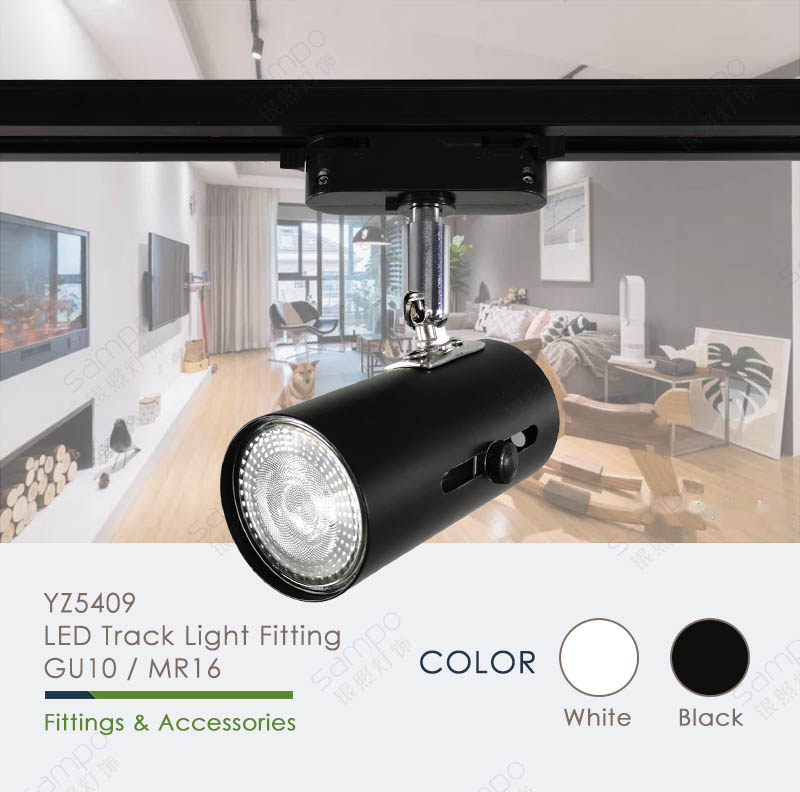
Compare GU10 with the other holder routes
| Family | Starting point | Enquiry distinction |
|---|---|---|
| GU10 | Replaceable-lamp family | Complete light or housing; confirm lamp and rail details |
| MR16 | Lamp and supply questions | Complete light or housing; ask about the electrical arrangement |
| COB | Module-based head | Ask about fixed, adjustable-focus or dimmable options |
| E27 PAR20 / PAR30 | Screw-base lamp family | Complete light or body; confirm the intended lamp envelope |
A GU10 order starts with the offer form
GU10 complete lights and housings serve different buyers even when the outside form appears similar. Mark every enquiry line as complete light or housing and identify the intended lamp arrangement. An order description should tell the next reader what work remains after receipt. For a complete head, that discussion centres on the intended installation; for a body, it concerns the assembly still to be performed. Making that distinction visible beside the GU10 description helps prevent an apparently comparable price from hiding a substantially different scope of supplied components.
An assembler is pricing a body for its own build while a distributor wants a finished head for its lighting assortment.
Lamp-change logic for a trade assortment
Replaceable-lamp formats allow lamp selection and enclosure selection to be considered as related but distinct decisions. Ask about lamp access, retention and the intended lamp envelope for the exact head.
Lamp access deserves a hands-on review because a convenient replacement routine depends on more than the holder name. Consider where the person stands, how the lamp is retained and whether aiming must be disturbed during access. The practical sequence matters especially in occupied interiors where a routine replacement should be understandable to staff who did not select the original fitting.
GU10 compared with MR16
GU10 and MR16 are separate range families; their electrical and physical requirements should be checked for the selected model. Compare the relevant lamp and supply arrangements instead of assuming that similar front diameters imply interchangeability. Similar front appearances can distract from the parts behind the lamp. A comparison between holder families should account for the entire intended assembly and the equipment remaining in the building. Identifying the existing lamp and supply arrangement before discussing replacements gives the buyer a sounder basis for choosing a route than comparing photographs of circular spotlight openings in isolation.
A housing order needs assembly detail
GU10 housings belong to the body offer for assemblers and lighting brands, with structural work discussed from a drawing or sample. Identify which interfaces, enclosure features and finishing details must be retained through the assembly process.
A housing drawing should distinguish visible design preferences from interfaces needed by the assembler. Mark the areas that accommodate internal parts and the surfaces that meet other components. That separation makes sample comments more useful: a cosmetic change can be discussed on its own, while an interface change receives attention for its effect on assembly and the final product arrangement.
The rail match remains a separate check
The GU10 holder choice does not settle which wire system or voltage matches the intended rail and head. Include the track identification and supply information with the holder request. Different rooms in the same building may use different track systems despite a uniform ceiling colour. Label rail photographs by location and keep each proposed replacement head linked to its intended area. This prevents a correct match established for a trial location from being carried across the whole project without checking whether the retained rails share the same interface.
Finish belongs on the model enquiry
Black, white, grey and project colour customisation can be discussed alongside powder coating or baked paint arrangements. Request the desired finish and ask for the material and finish details of the particular model.
Finish assessment benefits from viewing the body and adapter together because adjacent surfaces can read differently under the same light. A small colour sample alone may not show the effect of curves, seams and sheen. Describe which visible parts should coordinate, then review the proposed appearance against the actual ceiling and neighbouring fittings used in the interior scheme.
Describe the light you need from the head
Power, colour temperature, rendering, beam angle and adjustment vary by model rather than being fixed by the GU10 family name. Send the visual task and request the relevant model details before comparing head options. The desired result on the target should lead the discussion of lamp characteristics. A narrow display and a broader merchandise wall can call for different distributions even with the same holder family. Include the viewing direction and target surface in the brief, giving the proposed model a practical lighting task against which its details can be evaluated by the buyer.
Bring the GU10 request together
An organised request combines holder, offer form, rail details, quantity, destination market and any required customisation. Ask for applicable CE marking information and the RoHS documentation for the specific model.
Supporting files are most useful when they can be traced to the quotation item they describe. Keep model references consistent between the requested head, technical attachments and commercial response. If an alternative is suggested, record it as an alternative rather than quietly replacing the original description, so the purchasing review can identify which characteristics and documents apply to the proposed GU10 assembly.