GU10 complete
Complete-light enquiry
Choose a holder family and an offer form to narrow the Sampo range. A complete light, a housing and a different head format solve different purchasing tasks; confirm the rail match for the selected model.
Request a track light quotation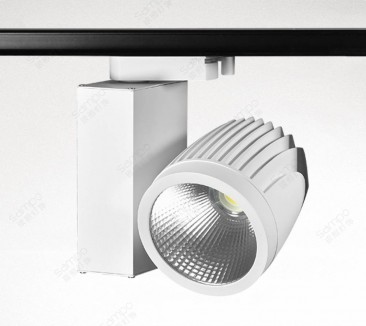
13 series entries
Complete-light enquiry
Housing/body for assembly
Complete-light enquiry
Housing/body for assembly
Complete-light enquiry
Complete-light enquiry
Complete-light enquiry
Complete-light enquiry
Complete-light enquiry
Housing/body for assembly
Format guide — ask about an available model
Format guide — ask about an available model
Format guide — ask about an available model
No series entries match both selections. Change the holder or supply form.
| Family | Starting point | Enquiry distinction |
|---|---|---|
| GU10 | Replaceable-lamp family | Complete light or housing; confirm lamp and rail details |
| MR16 | Lamp and supply questions | Complete light or housing; ask about the electrical arrangement |
| COB | Module-based head | Ask about fixed, adjustable-focus or dimmable options |
| E27 PAR20 / PAR30 | Screw-base lamp family | Complete light or body; confirm the intended lamp envelope |
Complete lights and bodies for further assembly belong on separate purchase lines, even when their appearance is similar. Use the holder filter first, then choose the assembly form that matches the order. Separate complete-light purchases from bodies intended for further assembly. Someone ordering bodies needs assembly information, whereas an installer needs a supplied assembly and its connection details. Keeping those routes distinct makes the catalogue easier to use even when both products share a holder family and an almost identical exterior silhouette in the product photographs.
GU10 complete track lights and GU10 housings offer different starting points around a replaceable-lamp format. State whether the enquiry is for finished heads or for housings intended for an assembly operation.
A replaceable lamp can influence the service routine independently of the body chosen around it. Consider how staff will identify a replacement, reach the retention mechanism and restore the intended aiming position. Those practical questions help a distributor organise its assortment around use and maintenance, while an assembly buyer can concentrate separately on the enclosure and internal construction.
MR16 complete lights and housings belong to the range, while electrical arrangements need review for the particular model. Send the lamp requirement and ask about the supply arrangement rather than inferring it from a holder label. The lamp name should travel with a description of the surrounding electrical arrangement. A refurbishment can retain some equipment while replacing other parts, making the scope of change especially important. Mark what remains in place on the project sketch so discussions about an MR16 head also account for the equipment that supplies and supports the intended lamp.
The COB range includes complete heads, adjustable-focus variants and dimmable variants. Make the need for focus adjustment or dimming explicit in the enquiry and request the matching model details.
Focus adjustment and dimming answer different questions. Changing the illuminated area affects how an object is framed, while lowering light output changes its relationship with the room. A display brief should describe both behaviours separately when both matter. This avoids choosing an adjustable-looking head whose useful feature addresses a different problem from the one the buyer actually needs solved.
E27 PAR20 and PAR30 track lights and bodies are part of the offer; the body and complete-light lines remain separate. Describe the intended lamp format and whether the order should include a complete head or an assembly body. A screw-base format does not describe the full space required around the lamp. The envelope, access route and surrounding body all contribute to the assembly decision. An enquiry that identifies the intended lamp shape alongside the purchase form gives the discussion a clearer starting point than a broad request for an E27 product without any installation context.
Pendant, linear and grille entries lead to buying guides that explain those market formats and their selection questions. Use these entries to describe a desired arrangement, then ask about the appropriate available model.
Different visible formats can coexist in an interior while serving unrelated lighting tasks. A suspended light over a counter creates a different relationship with people than an accent aimed from the ceiling. Describe each intended role on the layout before asking about equipment, so the discussion with Sampo follows the room rather than treating every track-mounted shape as interchangeable.
A holder label describes a light-source interface; the track adapter and rail system require their own matching check. Record the wire system and voltage alongside each holder choice rather than treating either as a substitute for the other. Procurement records should keep the lamp interface and rail interface in separate fields. Otherwise, an accurate holder description can create false confidence while the actual connection remains unresolved. A marked image of the head and rail beside the written requirements helps colleagues recognise that the light-source choice answers only part of the installation question during a purchasing review.
A compact enquiry can begin with holder family, complete light or housing, quantity, market and rail details. Add requested light characteristics and ask for the relevant model data before selecting the final order line.
A head schedule should remain understandable after it leaves the person who prepared it. Use room names or drawing references that another reader can locate, and attach each requested characteristic to the appropriate line. This reduces the chance that a colour preference, control requirement or rail photograph from one area is accidentally applied to every proposed head in the project.
NEXT / HEAD SELECTION
Send the holder family, rail details, quantity and market.