Pendant track lights: drop and placement guide
Pendant heads on track bring the light source down from the ceiling. Their value depends on the task below, the sight lines around the drop and the system used to support and connect them.
Review the buying questions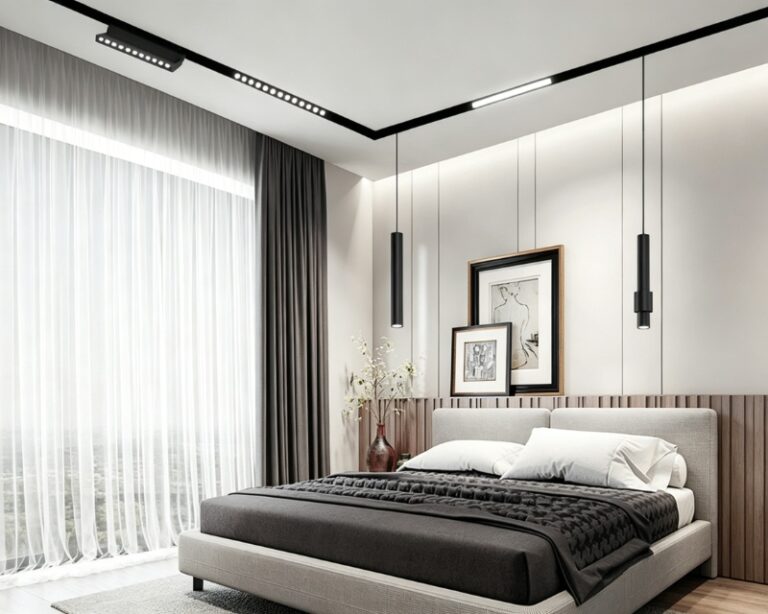
A pendant changes the light position
Lowering the source can bring attention to a counter, bedside surface or small table. Define the surface being lit before selecting the visible pendant shape. Lowering the light source changes its relationship with the object and with the people nearby. Over a counter, the suspended position can help define a local zone even when the rail remains part of a wider ceiling arrangement. Consider the view across that zone as well as the light on its surface when discussing the most useful pendant form and placement.
Drops need a measured context
Pendant drop length should be considered with ceiling height, furniture and circulation. Send a section sketch showing the ceiling, working surface and relevant viewing positions.
A drop should be considered alongside the surface below it and the paths around it. Furniture position, standing views and seated conversation can all affect whether the source feels well placed. Mark those relationships on an elevation rather than choosing the suspension from a ceiling plan alone, which can hide the vertical arrangement that determines how the pendant occupies the room.
Track connection and support
A pendant assembly must suit the electrical interface and the support arrangement of its intended track. Ask about the exact adapter, suspension arrangement and rail compatibility. A suspended assembly asks a different support question from a compact head close to the rail. The connection needs to be assessed as part of the intended complete system, with attention to the mounting context. Keep structural and electrical questions visible in the project discussion rather than assuming that a familiar track profile establishes suitability for every hanging format a buyer might prefer.
Pendants versus adjustable spots
A pendant anchors light to a place, while a spotlight can redirect an accent toward changing objects. Compare the stability of the furniture layout with the likelihood of future display changes.
Pendants and spots can support the same interior without performing the same job. A hanging source may define a table or counter, whereas an adjustable head may direct attention toward a wall. Assign those roles on the room sketch so the chosen format follows the visual and practical task instead of repeating a favourite fixture shape across unrelated positions throughout the space.
Keep the source out of sight
The height and shielding of a pendant influence how much of the bright source is visible. Assess the pendant from seated, standing and approaching positions. A comfortable pendant arrangement needs a review from ordinary eye positions. Someone seated across a counter may see into the opening even when a standing observer does not. Consider the source view from both sides of the furniture and along circulation routes, then use those observations to discuss the desired relationship between shielding, drop and the lighting task on the surface below.
Do not infer a room specification from a photo
An interior photograph can illustrate a form without establishing the head's supply or optical characteristics. Ask for the exact product details and assess them against the intended room.
An attractive reference interior can suggest proportion without describing the conditions in the buyer's room. Extract the useful relationship, such as a light aligned with a counter, and compare it with the actual furniture and sight lines. This makes the photograph a design aid while preserving the need to discuss the proposed assembly and its system requirements for the room where it will be installed.
Coordinate mixed head formats
Pendants and spotlights can serve different lighting roles, but a shared visual idea does not prove system compatibility. Identify each format separately in the head schedule and ask about the matching rail and controls. A mixed ceiling needs coordination at the level of both appearance and operation. Hanging forms and compact accents may have different visual weights and control intentions even when they sit along related lines. Show their roles together on the layout so the interior reads coherently and the purchasing discussion can distinguish the equipment and connection questions belonging to each proposed lighting format.
Write a pendant enquiry around the drop
A useful request states the desired format, surface, drop requirement, rail details and market. Attach a section drawing and distinguish the visual preference from the technical requirements.
An enquiry centred on the drop should explain what the pendant is expected to do at its suspended position. Describe the surface, the people using it and the surrounding ceiling arrangement. Those details give Sampo a practical basis for discussing a suitable format, while the rail interface and support requirements can be reviewed separately for the intended complete assembly and location.
Discuss pendant track lights: drop and placement guide with Sampo
Attach the counter height and proposed drop position when asking Sampo about a pendant-format head and its rail connection.
Ask Sampo about fit