Modern track lighting for clean interiors
Modern track lighting is a visual arrangement as much as a fixture style. Slim lines, controlled repetition and careful aiming can make the system feel integrated with the room rather than added as unrelated hardware.
Review the buying questions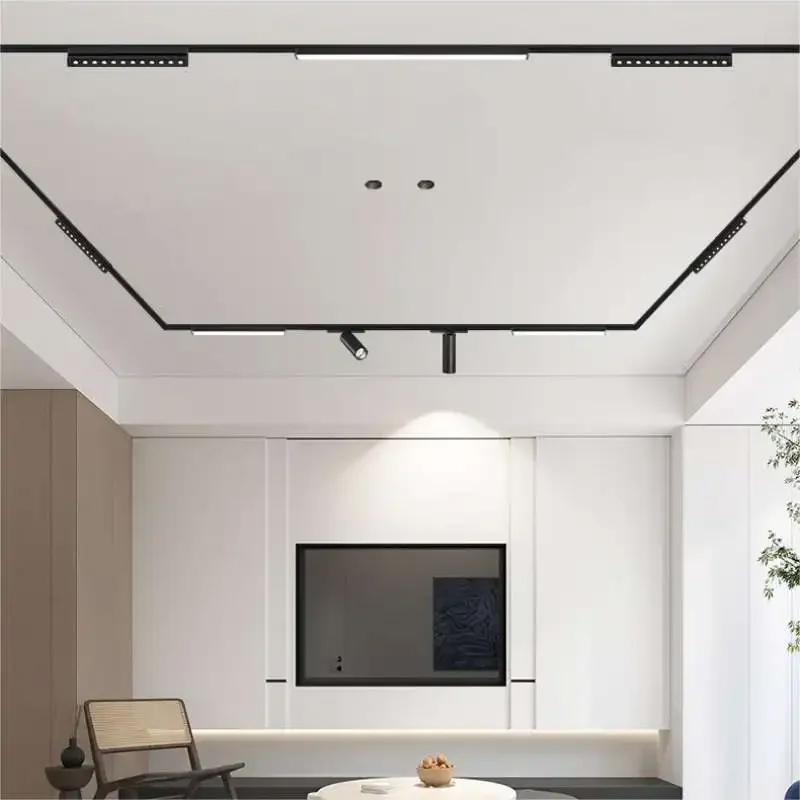
Start with the ceiling composition
Track positions can align with furniture, circulation or architectural lines rather than merely following available wiring. Mark the room's dominant lines before selecting the track layout. A ceiling layout should respond to the room people actually inhabit. Furniture, circulation and architectural edges can provide useful alignments, while existing wiring simply describes a starting condition. Show those relationships together so the track composition has a clear purpose and individual head positions can follow useful lighting tasks instead of being distributed across the ceiling solely to create an attractive empty-room drawing.
Quiet bodies and useful light
A visually restrained head still needs an optic and adjustment suited to the intended task. Choose the lighting role before reducing the visible size of the head.
A restrained body still needs to direct light successfully from its chosen position. Consider what the compact appearance must accommodate, including the target, the viewer and access for maintenance. This keeps the design preference connected to use, helping a buyer discuss a quiet-looking head without assuming that reducing visible size automatically produces either better visual comfort or a more effective lighting result in the room.
Black and white change the reading
A dark track can become a graphic line while a light track can recede against a similar ceiling. Compare the finish against the actual ceiling and surrounding fittings. Colour changes the perceived relationship between the equipment and the architecture. A dark line may echo joinery or frame a zone, while a pale line may blend with the ceiling. Review the whole assembled run against nearby elements rather than choosing a colour from an isolated sample, because the adapter, joints and spacing all contribute to how strongly the track is read from ordinary viewing positions.
Repetition creates visual order
Consistent alignment and a purposeful rhythm usually read more clearly than arbitrary head positions. Relate the head placement to the objects or zones being lit.
Repetition is most convincing when it follows something recognisable in the room. Heads might relate to display bays, furniture groupings or changes in use, giving the arrangement a legible rhythm. Revisit those relationships after a furniture change so a once-coherent ceiling does not retain an outdated pattern whose neat spacing directs light toward areas that no longer serve the original purpose in the interior.
A slim line is not a complete specification
A low-profile appearance says little about rail interface, light distribution or service access. Request those technical details separately from the desired visual character. An architectural reference can communicate the desired slenderness of a line while leaving essential equipment questions unanswered. Separate that visual aim from the interfaces, optical task and service routine in the brief. This allows the technical conversation to preserve the intended appearance where practical while still identifying the information needed to evaluate the actual assembly proposed for the ceiling and its daily operation.
Layer light rather than flattening it
Accents, background illumination and task light contribute different experiences in a modern room. Keep some surfaces quieter while identifying where useful working light is needed.
Layering gives different parts of the room permission to serve different tasks. A reading position, a display and a route through the space need not compete for equal attention. Describe those priorities before aiming the heads, allowing the overall arrangement to create useful contrasts and a calmer background instead of filling every surface with similar accents that flatten the intended visual hierarchy of the interior.
Photographs are composition references
An interior image can suggest a ceiling arrangement without establishing compatibility or performance. Extract the layout idea and test it against the actual room dimensions and lighting tasks. A reference photograph should be read for relationships rather than copied as a fixture schedule. Notice what the track aligns with, which surfaces receive attention and where people would look, then compare those conditions with the actual project. This preserves the useful design idea while allowing the chosen layout and head arrangement to respond to different furniture, ceiling conditions and sight lines in the buyer's room.
Translate style into buying questions
A practical brief names the track layout, holder preference, lighting roles, finish direction and control needs. Ask for a suitable available head and its rail-matching details.
Style language becomes useful to procurement when it names observable choices. Explain whether the priority is a quieter ceiling, coordinated finishes, a particular alignment or a clearer separation of lighting roles. Those intentions give the discussion with Sampo something concrete to address and let the buyer evaluate proposed heads against the room's design purpose alongside the independent requirements for the rail, source arrangement and controls.
Discuss modern track lighting for clean interiors with Sampo
Share the ceiling layout and furniture positions with Sampo so the head enquiry follows the room tasks as well as its appearance.
Ask Sampo about fit